B.Sc. Anaesthesia & Operation Theatre Techniques (BOATT)
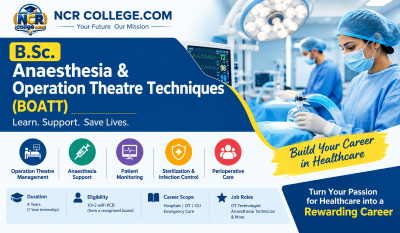
B.Sc. Anaesthesia & Operation Theatre Techniques (BOATT)
1. Course Name
B.Sc. Anaesthesia & Operation Theatre Technology (B.Sc. AOTT / BOATT)
This is an undergraduate allied-healthcare course that prepares students to assist doctors and anaesthesiologists during surgery, manage operation-theatre equipment, support patient care, and maintain safety and sterilization procedures.
2. Course Duration
- Usually 3–4 years, depending on the university and its curriculum.
- Many universities follow 4 years: 3 years of academic study + 1 year of clinical internship/training.
- Some institutions offer a 3-year programme without the same structure of an additional internship year.
3. Eligibility
Generally, candidates should have:
- Passed Class 12 / 10+2 from a recognized board.
- Studied Physics, Chemistry and Biology (PCB).
- Many universities require around 50% marks in PCB, although the percentage varies by institution.
- English may also be required as a subject.
- Some institutions specify a minimum age of 17 years.
Note: Eligibility requirements can differ between universities, so students should check the individual university's admission notification.
4. Approximate Fee
Fees vary considerably according to the university, location, and clinical-training facilities.
Examples of currently published fees include:
- Galgotias University: ₹1,00,000 tuition fee per year, plus applicable examination and other charges.
- Bharath Institute of Higher Education and Research: ₹1,50,000 per year for B.Sc. Operation Theatre & Anaesthesia Technology for 2025–26.
- CT University: ₹60,000 per semester, excluding other applicable charges.
- Manipal Academy of Higher Education: 2026–27 published total course fee of ₹6.58 lakh for B.AOTT, including listed tuition and other fees.
- Yenepoya: 2026–27 published total fee of ₹8.19 lakh for the 4-year B.AOTT programme.
Counselling estimate: Fees can range from approximately ₹1 lakh to ₹3 lakh or more per year, depending on the institution. Always confirm the latest official fee before admission.
5. Admission Process
The usual process is:
- Complete Class 12 with the required PCB subjects.
- Check the university's eligibility criteria.
- Submit the online/offline application form.
- Provide academic and identity documents.
- Take an entrance examination if the university requires one.
- Attend counselling/interview where applicable.
- Complete fee payment and admission formalities.
- Begin classroom and clinical training.
Some institutions admit students primarily on the basis of Class 12 marks, while others may use an entrance examination followed by counselling.
6. Mode of Study
- Regular / full-time, campus-based study
- Classroom teaching
- Practical laboratory training
- Operation-theatre training
- Hospital/clinical training
- Internship where prescribed
Because the course includes practical and clinical training, students should verify whether a particular institution provides the required hospital exposure.
7. Main Subjects / Syllabus
Subjects vary by university, but commonly include:
Basic Medical Subjects
- Human Anatomy
- Human Physiology
- Biochemistry
- Pharmacology
- Pathology
- Microbiology
Anaesthesia Subjects
- Introduction to Anaesthesia
- Anaesthesia Equipment and Machines
- Anaesthetic Drugs
- Anaesthesia Procedures
- Patient Monitoring
- Emergency and Critical Care
Operation Theatre Subjects
- Introduction to Operation Theatre Technology
- Surgical Procedures
- Surgical Instruments
- Operation Theatre Management
- Sterilization and Disinfection
- Infection Control
- Biomedical Waste Management
- Pre-operative and Post-operative Patient Care
Practical / Clinical Training
- Operation theatre assistance
- Anaesthesia assistance
- Equipment handling
- Instrument preparation
- Patient preparation
- Clinical internship
University curricula differ. For example, published curricula include Anatomy & Physiology, Infection Control, Biomedical Waste Management, Pharmacology and Operation Theatre Technology.
8. Career Scope
Graduates can work as allied-health professionals supporting surgical and anaesthesia teams.
Potential workplaces include:
- Government hospitals
- Private hospitals
- Multispecialty hospitals
- Operation theatres
- Trauma centres
- Intensive Care Units
- Emergency departments
- Surgical centres
- Healthcare institutions
- Medical colleges
- Research and healthcare organizations
The course is particularly focused on operation-theatre management, anaesthesia assistance, equipment handling, patient support and infection-control procedures.
9. Job Opportunities
Possible employment areas include:
- Hospital operation theatres
- Anaesthesia departments
- Surgical departments
- Emergency and trauma centres
- Intensive care units
- Day-care surgery centres
- Private healthcare facilities
- Government healthcare institutions
- Medical colleges and teaching hospitals
10. Common Job Roles
Depending on qualification, training and employer requirements, graduates may work as:
- Anaesthesia Technician
- Operation Theatre Technician
- Operation Theatre Technologist
- Anaesthesia Technologist
- OT Assistant
- Surgical/OT Technologist
- Clinical Technician
- OT Supervisor — generally after gaining relevant experience
- Healthcare/Clinical Support Staff
Job titles and responsibilities vary between hospitals.
11. Expected Salary Range
Salary depends on qualification, experience, employer, location and type of hospital.
A practical counselling range for fresh graduates is approximately:
- Entry level: ₹2.5–4.0 lakh per year
- With experience: approximately ₹4–7 lakh+ per year
- Experienced professionals in supervisory or specialized positions may earn more.
Published 2026 salary sources place entry-level OT technician earnings around ₹2.5–6 lakh annually, while another 2026 source reports typical entry-level earnings around ₹2.6–3.2 lakh. These are market estimates rather than guaranteed salaries.
12. Higher Study Options
After completing B.Sc. AOTT/BOATT, students can consider:
- M.Sc. Anaesthesia & Operation Theatre Technology
- Master's in Anaesthesia and Operation Theatre Technology
- M.Sc. Allied Health Sciences
- Other relevant postgraduate programmes in allied healthcare, depending on eligibility.
For example, CT University lists a 2-year Master's in Anaesthesia and Operation Theatre Technology for eligible bachelor's degree holders. Yenepoya also lists a 2-year Master of Anaesthesia and Operation Theatre Technology.
13. Universities / Institutions Offering This Course
Examples of institutions that currently list this or a closely named programme include:
- Sri Balaji Vidyapeeth — B.Sc. Anaesthesia & Operation Theater Technology.
- Galgotias University — Bachelor in Anaesthesia and Operation Theatre Technology.
- Bharath Institute of Higher Education and Research — B.Sc. Operation Theatre and Anaesthesia Technology.
- AMET University — B.Sc. Anaesthesia and Operation Theatre Technology.
- BLDE (Deemed to be University) — Bachelor of Anaesthesia and Operation Theatre Technology.
- Yenepoya — Bachelor of Anaesthesia and Operation Theatre Technology.
- Manipal Academy of Higher Education — Bachelor of Anaesthesia and Operation Theatre Technology.
This is not an exhaustive list; course names, duration and admission rules can change.
14. University-wise Eligibility and Approximate Fees
| University / Institution | Duration | Eligibility | Published Fee |
|---|---|---|---|
| Sri Balaji Vidyapeeth | 4 years | 10+2 with English + PCB, 50% | Check current university fee |
| Galgotias University | 4 years | 12th with minimum 50% in PCB; age 17+ | ₹1,00,000 tuition/year + other charges |
| Bharath Institute of Higher Education and Research | Varies by programme structure | Science/PCB requirements apply | ₹1,50,000/year for 2025–26 |
| CT University | 4 years | 10+2 with English, PCB, minimum 50% | ₹60,000/semester |
| Manipal Academy of Higher Education | 4 years | As per university admission requirements | ₹6.58 lakh total published 2026–27 fee |
| Yenepoya | 4 years | As per university/NCAHP-related eligibility | ₹8.19 lakh total published 2026–27 fee |
| BLDE (Deemed to be University) | 3 years + 1-year internship | 10+2/PUC/12th Science as per applicable requirements | Check current admission notification |
Fee figures are taken from published institutional information and may exclude hostel, examination, registration, clinical, transport or other charges.
15. Entrance Exam / Other Requirements
There is no single entrance examination applicable to every B.Sc. AOTT/BOATT programme in India.
Depending on the university, admission may be based on:
- Class 12/10+2 merit
- University-level entrance examination
- State-level admission process
- Counselling
- Personal interview
- Medical fitness certificate
- Minimum age requirement
- Specific PCB marks
For example, Sri Balaji Vidyapeeth lists SBV CET followed by counselling, while other institutions use Class 12 marks or their own selection process.
Student-Friendly Summary
B.Sc. Anaesthesia & Operation Theatre Technology (BOATT) is a healthcare course for students interested in working around operation theatres, anaesthesia, surgery and hospital patient care. Students learn about anaesthesia support, surgical instruments, operation-theatre procedures, sterilization, infection control and clinical patient support. The course generally takes 3–4 years, often including practical/clinical training and internship.
Need Degree Guidance?
Our authorized counselors can verify your eligibility and find the optimal university program.